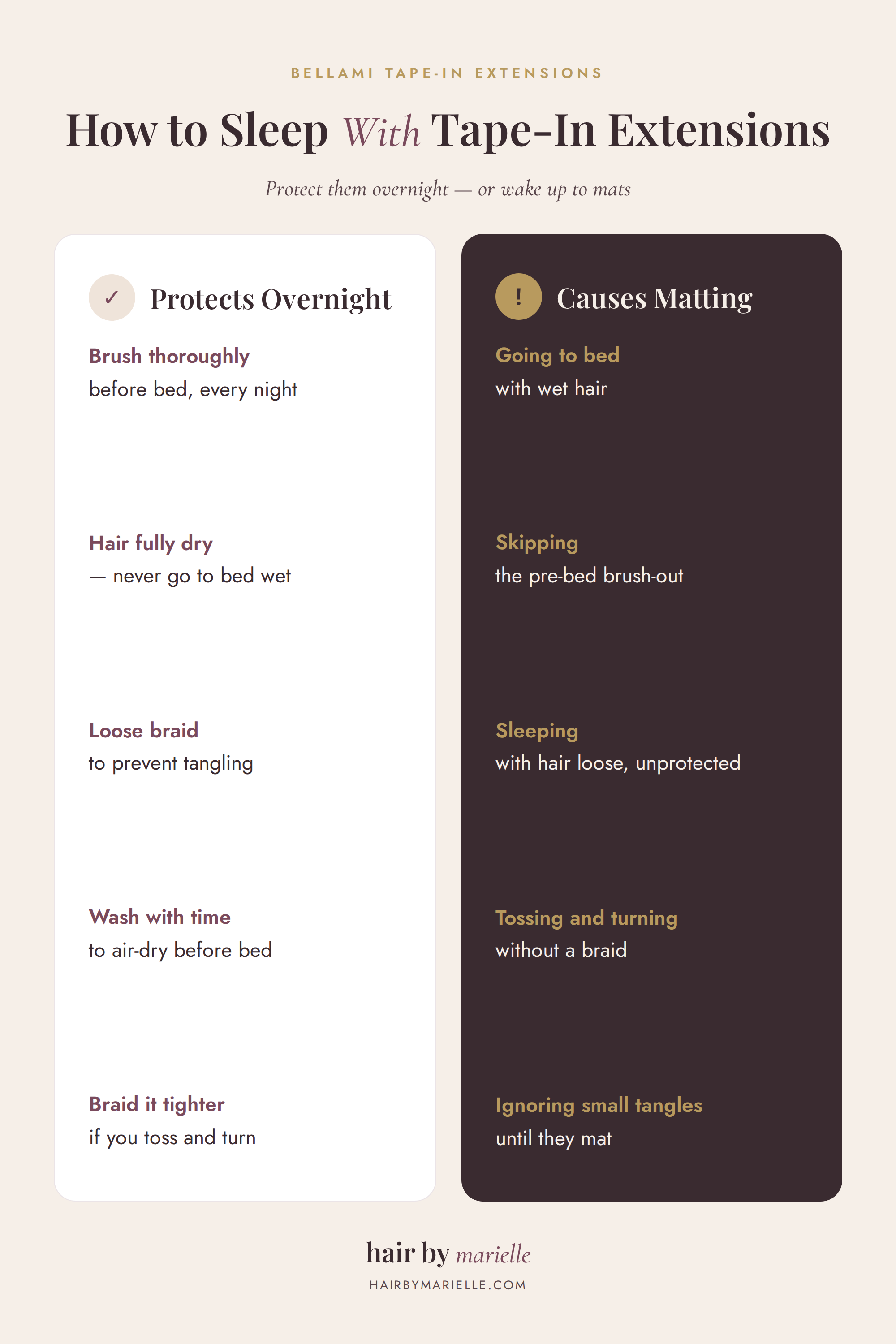
Brush thoroughly, braid it loosely, and make sure your hair is completely dry before bed. That's really the whole routine. It sounds almost too simple, but it's the difference between extensions that stay smooth and extensions that mat at the root — which is the hardest extension problem there is to fix.
A quick note: this article contains affiliate links — as an Amazon Associate, I earn from qualifying purchases at no extra cost to you. I only point you to what I actually use behind the chair.
Why wet hair overnight is the real problem
Wet hair in general is more vulnerable to breakage, and extension hair is already more prone to knotting than your natural hair on its own. Put those two together overnight and you've got a problem: the friction of moving around on a pillow, especially if you toss and turn, is far more likely to create knots that turn into matting right at the root. Matted roots are, hands down, the hardest thing to fix when it comes to extensions — so the goal is simple: never go to bed with your hair soaking wet.
The nighttime routine — brush, then braid
Brush your hair thoroughly before bed, then put it in a loose braid. That's the routine I give every client, and it's enough. If you know you'll be sleeping on it, plan your wash for early enough in the day that your hair has time to air dry before you're heading to bed.
Makes the pre-bed brush-out easier and gentler around the tape, especially if your hair tangles easily by the end of the day.
See it on Amazon →What happens if you skip it
Go to bed with your hair a mess and the mats you wake up to can be significant. Matting can pull your natural hair and extension hair together, causing breakage in both — and because the tension lands right at the root, where the tape attaches to your natural hair, it's your natural hair that pays the price, not just the extension. That kind of breakage takes a long time to grow back. It's rarely the extensions that end up ruined — it's the hair underneath them.
Silk pillowcases — my honest take
People ask about this a lot, and I'll give you the honest answer rather than the trendy one: I don't personally use one, and I think it's a bit overhyped. A silk pillowcase isn't going to undo the effects of skipping a brush-out or going to bed with wet hair. If you already own one and like how it feels, there's no harm in using it — but if you're deciding whether it's worth buying specifically for your extensions, I'd put my money toward a good detangling routine before bed instead. That's what actually protects the hair.
If you toss and turn — or share a bed
A loose braid is especially worth it if you're an active sleeper. It keeps hair from tangling as you move, and if you share a bed with a partner or have kids, it also keeps loose strands from getting pulled or tugged on during the night.
The one mistake I actually see
Honestly, I don't run into a lot of nighttime problems with my clients. If there's one thing, it's simply not brushing enough before bed. Everything else in this routine follows from getting that one habit right.
Every product mentioned in this routine, together in one place — my curated Amazon list for extension wash day and nighttime care.
Shop the list →My full at-home routine, in one guide
The exact products I use and recommend, how often to use each one, and my simple wash-day routine — plus an interactive Wash Day Routine card for your phone.
No spam, ever — check your email to confirm and your free guide is on the way.
Quick answers
In the Livonia area and thinking about extensions? Find me here or book a consultation.