No — tape-in extensions do not damage your natural hair. When they're installed correctly and cared for the way I recommend, clients can wear them for years with zero breakage. The damage people worry about almost always comes down to two things: how the extensions were installed, and what happens to them at home between appointments.
A quick note: this article contains affiliate links — as an Amazon Associate, I earn from qualifying purchases at no extra cost to you. I only point you to what I actually use behind the chair. The extension hair itself is never sold through a link here — that's something I source directly for my clients, never a retail purchase.
See: Myth-Busting Monday — Extensions & Hair GrowthSwipe through the full breakdown on Instagram See: Myth-Busting Monday — Extensions & Hair DamageSwipe through the full breakdown on InstagramWhat actually causes damage (it's rarely the extensions themselves)
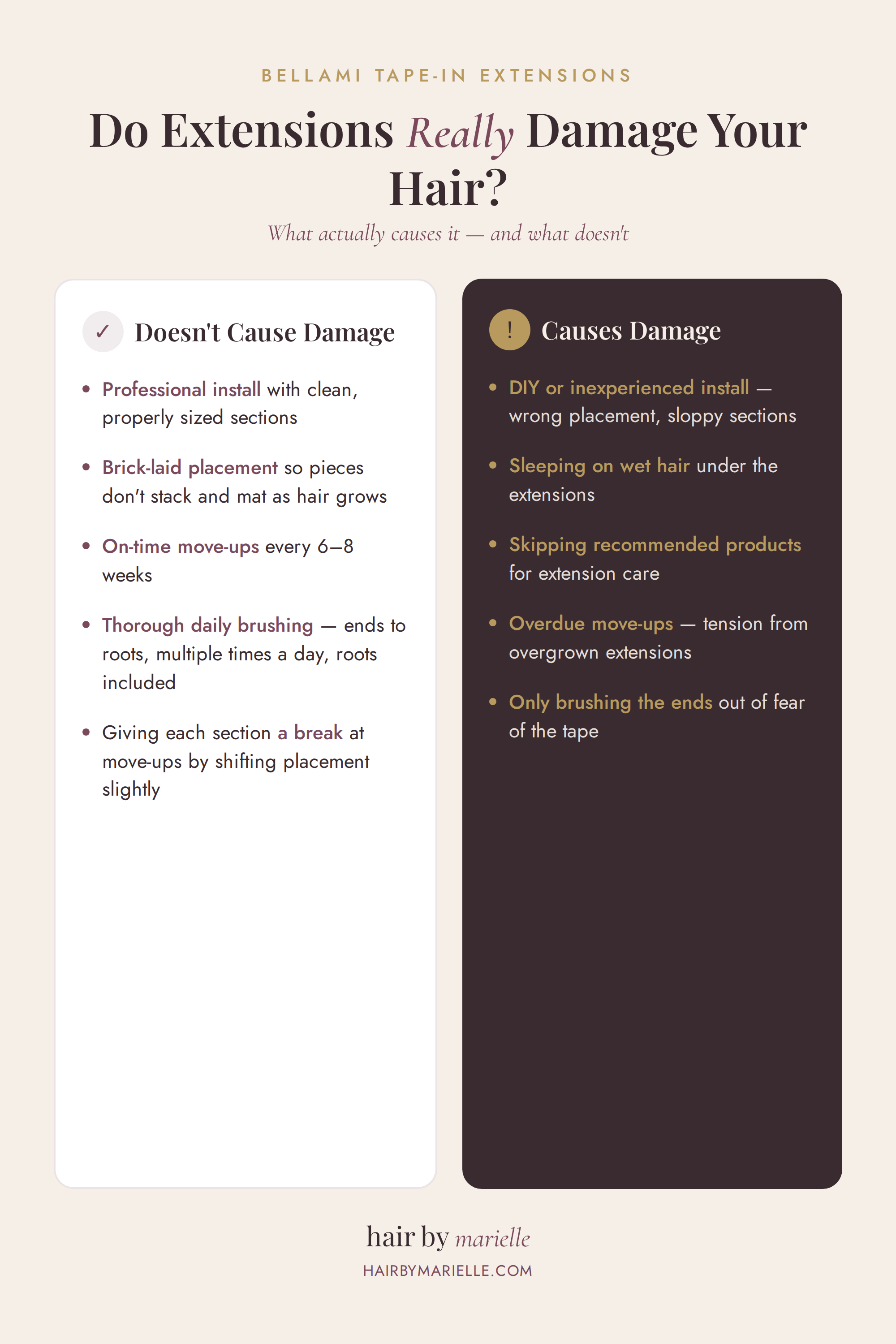
Damage from tape-ins is caused almost entirely by habits, not the extensions themselves. If you're going to see breakage, it shows up right at the root — exactly where the tape is holding the extension piece. A trained, licensed stylist using clean, properly sized sections and correct placement won't cause damage during install or removal. I've never had a client's natural hair damaged from an install or removal I've done myself.
Want my exact extension care routine? Grab my free Hair Guide below.
How a professional install protects your hair
Clean, small sections and precise placement are what make an install safe. I personally use a brick-laying technique — placing each row of extensions so they don't stack directly on top of each other — which keeps the hair underneath from matting or tangling as it grows out between appointments.
At every move-up, I remove the old tape and any residue, then place the new piece just above or below the previous spot rather than in the exact same place. That gives the natural hair that held the extension a break instead of asking the same strand to hold tape appointment after appointment. It's a small thing, but it's made a real difference in keeping clients damage-free long-term.
What clients unknowingly do at home that causes damage
The most common at-home mistakes are going to bed with extensions still wet, skipping the recommended products, or not having a real brushing routine. All three put unnecessary tension and friction on the hair overnight or between washes.
My go-to for gentle, tangle-free brushing around tape placements. It smooths and detangles without adding weight, which makes the daily brushing routine below so much easier to actually stick to.
See it on Amazon →The brushing rule — do this every day
Brush multiple times a day with a wet or detangling brush, always working from your ends up toward your roots to detangle — never roots to ends. But the mistake I see most isn't direction, it's stopping short. Clients get nervous about disturbing the tape and only brush the ends, leaving the roots alone. You have to brush thoroughly through the entire length of your hair, roots included. This is exactly what I show every new extension client at their first appointment, in person, on their own hair — and once they see it, they realize brushing near the tape is completely safe.
I recommend this pair for extension clients specifically — the bond strength helps the hair holding your tape stay resilient between move-ups, especially since that hair is doing a little extra work.
See No. 4 on Amazon →See No. 5 on Amazon →
Every product above, together in one place — my curated Amazon list for extension bond repair and care.
Shop the list →Is it ever not worth the risk?
There are very few hair types I won't put extensions in. The one case I hesitate on is a client with significantly overprocessed, damaged hair — and even then, I don't say no outright. I'll put them on a conditioning and strengthening routine for a few months first and reassess before installing anything. If you're not sure which category you fall into, a quick consultation is the easiest way to find out.
Going cheap or DIY is where real damage happens
This is where damage actually happens. Sectioning and placement are everything — extensions placed too close to the hairline or in areas where hair is naturally weaker can pull that hair straight out, causing bald spots. Sloppy sections that trap strands from different parts of the head in the same tape create tension in the wrong places and can rip hair out. This is exactly why the stylist matters more than the product.
Busting the myth — "extensions damage your hair"
In my experience, it's the opposite: extensions mean you touch your natural hair less. Less heat styling, less washing, less manipulation overall. I've had clients wear the same install for two years with zero breakage — and when we finally take it out, they're always shocked at how much their hair grew. Extensions don't make your natural hair thicker on their own (that's what the extensions are there to add), but they don't stunt growth or cause damage either, as long as the care routine above is followed.
My full at-home routine, in one guide
The exact products I use and recommend, how often to use each one, and my simple wash-day routine — plus an interactive Wash Day Routine card for your phone.
No spam, ever — check your email to confirm and your free guide is on the way.
Quick answers
In the Livonia area and thinking about extensions? Find me here or book a consultation.